
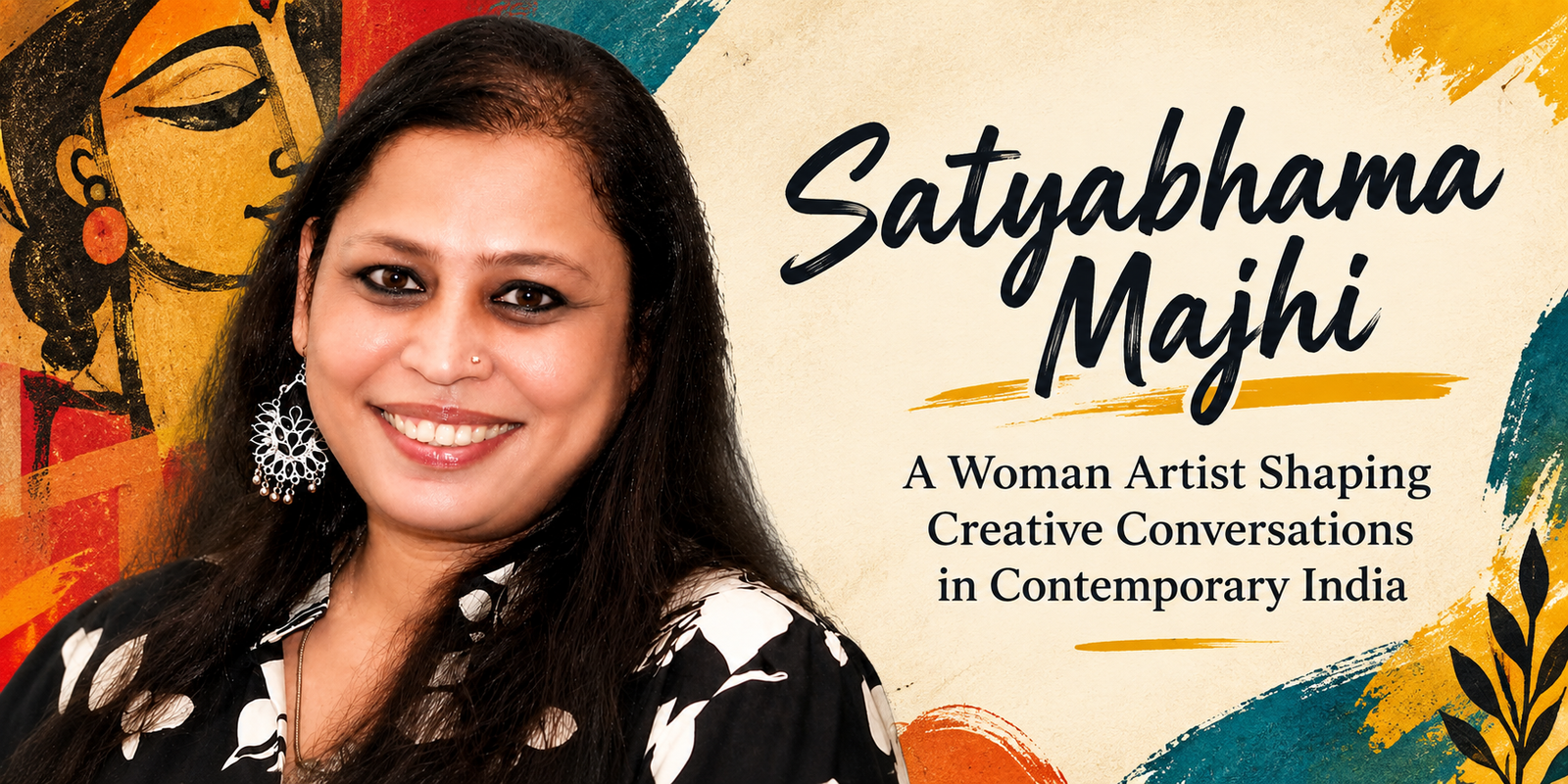

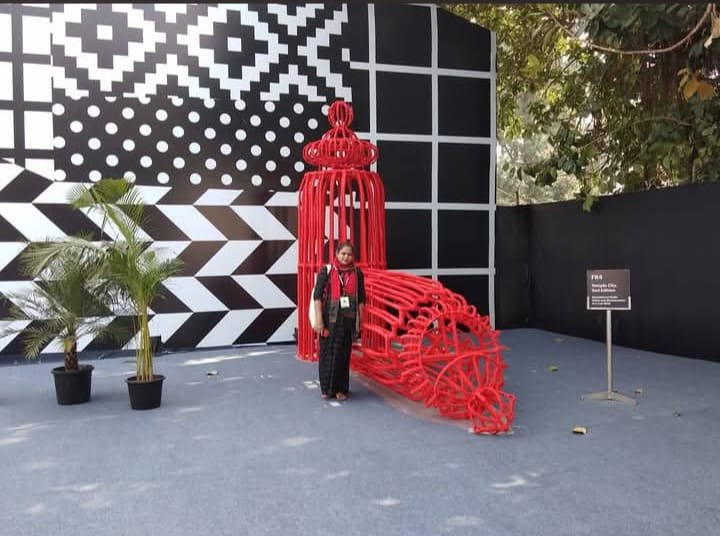
Contemporary art is increasingly becoming a space where individual creativity meets collective experience. Across India, artists, artisans, and cultural practitioners are finding new ways to bring traditional knowledge and contemporary artistic practices into shared spaces. Odisha-based artist Satyabhama Majhi has been part of this broader movement through her multidisciplinary practice, community engagement, public-art projects, and collaborative cultural initiatives.
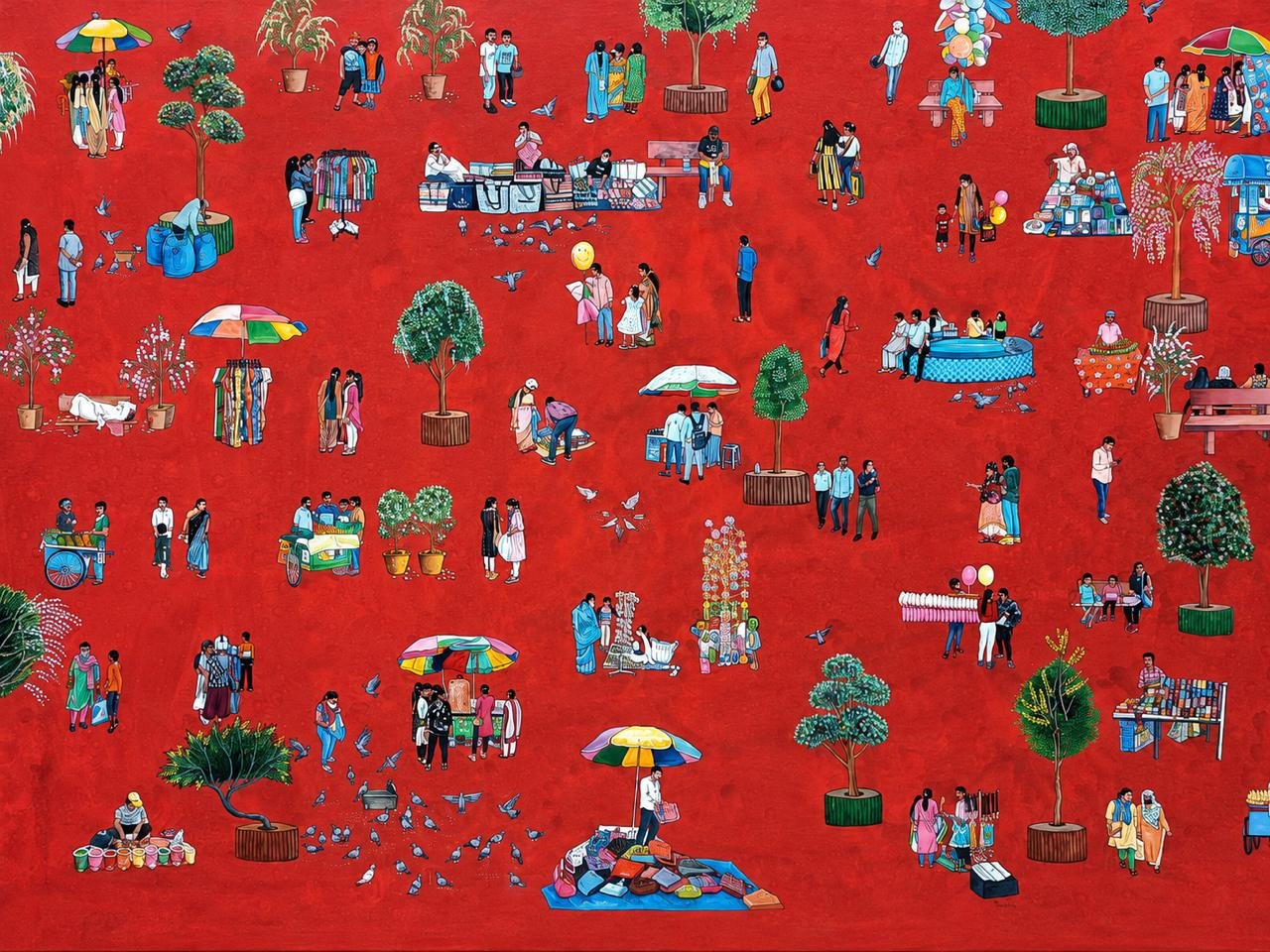
While Majhi’s career encompasses painting, sculpture, installation, photography, mixed media, education, public art, and curatorial work, collaboration is an important thread running through her practice. Her participation in projects involving women artists and artisans is particularly significant because it demonstrates how diverse creative voices can contribute to a shared cultural expression.
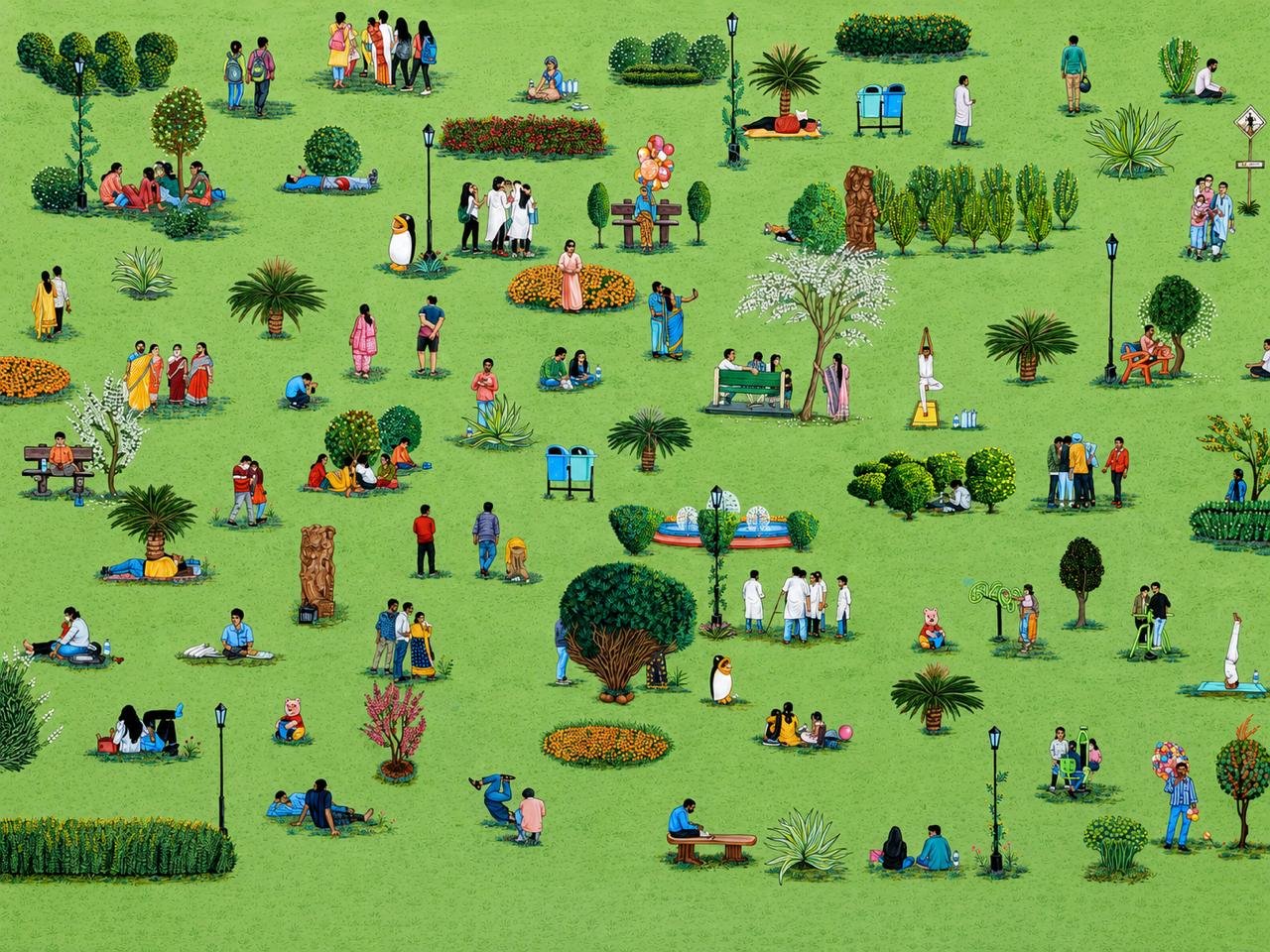
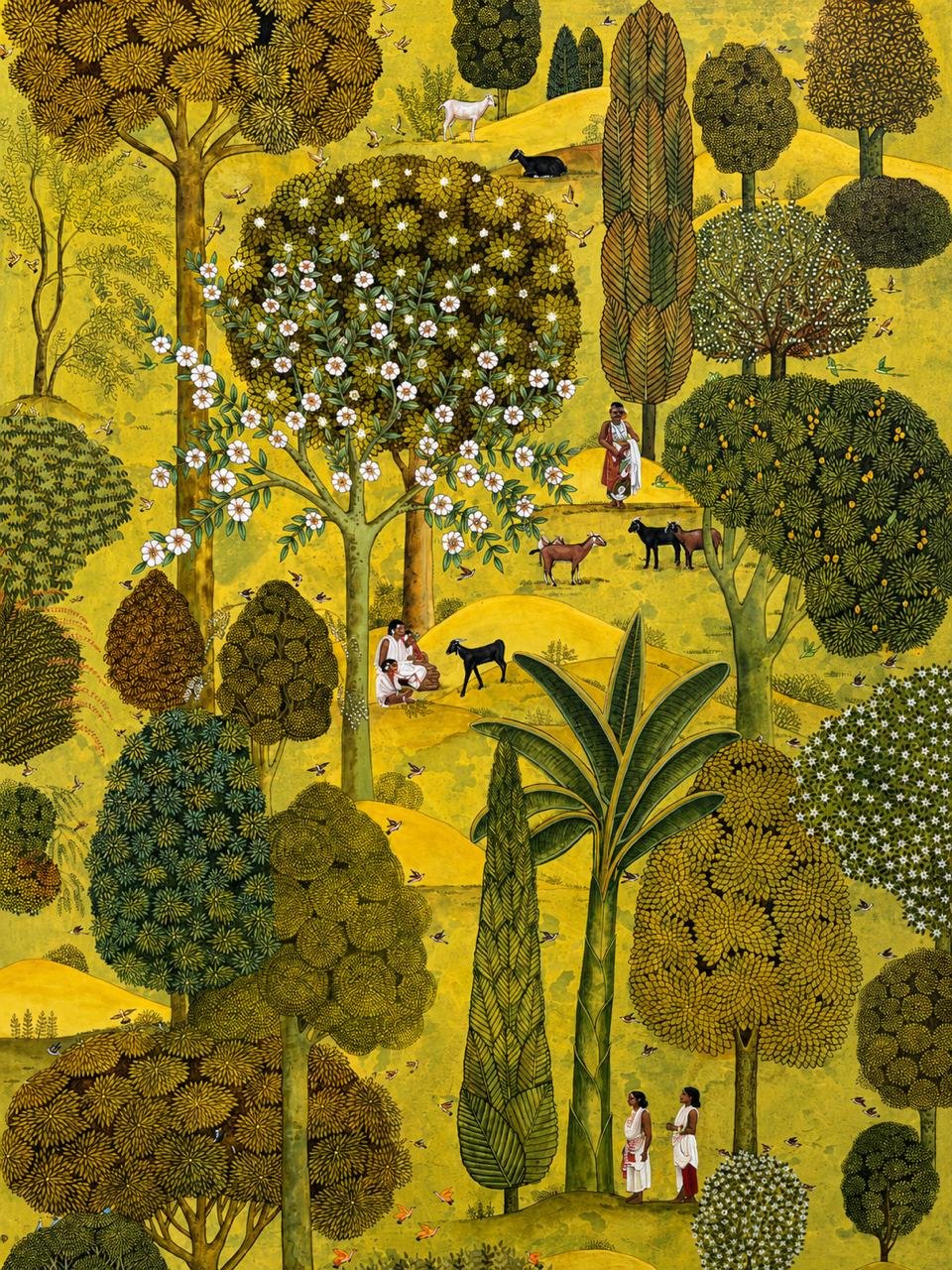
Creativity Beyond the Individual Artist
The conventional image of an artist often centres on an individual working independently in a studio. Contemporary community-oriented practice offers another possibility: art can emerge through collaboration.
Majhi’s work reflects this broader understanding.
Her activities have involved artists, artisans, children, communities, educational institutions, and public audiences. In these settings, creativity becomes an exchange rather than a one-way process.
This approach is especially relevant when working with people who possess forms of knowledge developed through generations of cultural practice. Traditional craft, regional visual languages, local materials, and community memories can all become part of a larger contemporary artistic conversation.
Women Artists and Artisans in Collective Practice
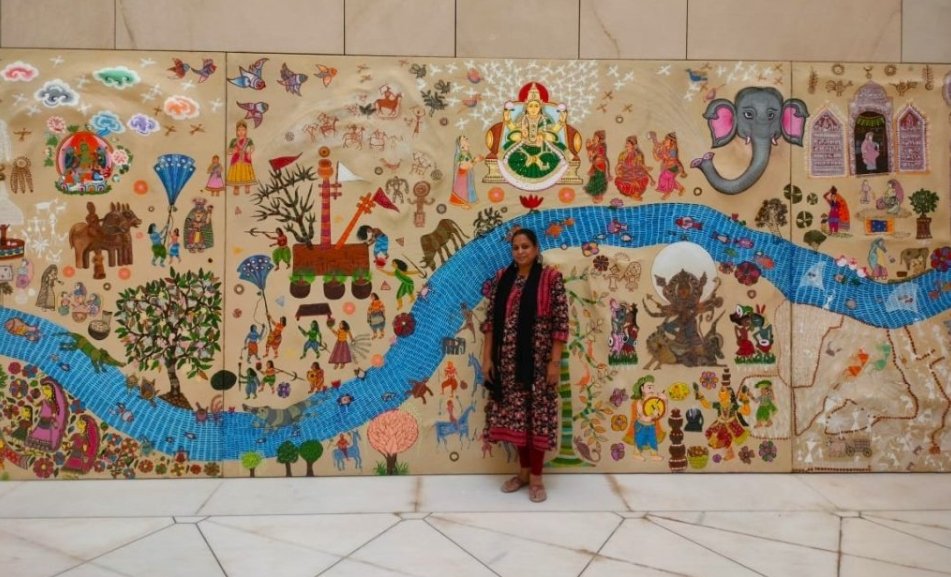
One of the strongest examples of Majhi’s involvement in collective cultural expression came through People’s Wall – Jan, Janani and Janmabhumi in 2023.
The project was created for the New Parliament House through the Lalit Kala Akademi, New Delhi, and brought together women artists and artisans from different regions of India.
Majhi participated as a Co-Sutradhar and creative contributor.
The project created an opportunity for regional artistic traditions and the knowledge of women practitioners to be represented within an important national cultural setting.
Rather than presenting a single artistic viewpoint, the project brought together multiple creative traditions and experiences.
The Meaning of Collective Cultural Expression
Collective art can offer a different understanding of cultural identity.
India’s cultural landscape is made up of numerous regional traditions, communities, materials, techniques, and visual languages. When these forms come together in a collaborative project, the resulting work can communicate diversity rather than uniformity.
People’s Wall – Jan, Janani and Janmabhumi provided such a context.
The participation of women artists and artisans from different regions highlighted the variety of India’s artistic traditions while creating a shared visual expression.
Majhi’s involvement in the project fits naturally within her wider interest in connecting local knowledge with broader cultural conversations.
The Role of the Co-Sutradhar
Majhi’s position as a Co-Sutradhar is particularly relevant to understanding her approach to collaboration.
The term suggests a role concerned with bringing different strands together.
This is consistent with her wider professional practice, which includes curatorial and facilitation activities alongside artistic production.
Instead of approaching a collaborative project solely from the perspective of an individual creator, the artist can help connect people, ideas, traditions, materials, and visual approaches.
Such a role requires sensitivity to differences between participants while also working toward a common artistic outcome.
Traditional Knowledge and Women’s Creative Practice
In many communities, cultural knowledge is transmitted through everyday activities, materials, craft traditions, visual patterns, rituals, and forms of making.
Women artists and artisans can be important participants in maintaining and transmitting such knowledge.
Majhi’s wider engagement with traditional and indigenous visual culture has made her attentive to the relationship between artistic practice and community knowledge.
Her work with the Dongaria Kondh community, for example, has involved sustained observation of cultural practices, livelihood patterns, visual traditions, and relationships with nature.
This experience contributes to a broader understanding of culture in which knowledge is not limited to formal institutions.
From Traditional Knowledge to Contemporary Art
Majhi’s own artistic practice demonstrates how traditional knowledge can be interpreted through contemporary forms.
Her background in traditional art education provides one foundation for this approach.
Over time, she has incorporated traditional references, natural materials, indigenous visual influences, and place-based experiences into a multidisciplinary contemporary practice.
Natural pigments derived from materials such as chalk stone, charcoal, turmeric, geru soil, and brown stone demonstrate how material knowledge can become part of contemporary artistic experimentation.
This process does not require traditional practices to remain unchanged. Instead, knowledge can be carried forward through new artistic contexts.
Collaboration and Cultural Diversity
A collaborative project involving artists and artisans from different parts of India can also reveal the diversity within Indian art.
Regional traditions may differ in colour, pattern, technique, material, symbolism, and subject matter.
Bringing these differences together can create a richer cultural narrative.
Majhi’s participation in People’s Wall therefore reflects an important aspect of contemporary Indian art: the possibility of creating a national cultural expression while preserving regional identities.
The national does not necessarily have to replace the local. It can be constructed from many local voices.
Learning Through Communities
Majhi’s community-oriented work also suggests that collaboration is a form of learning.
Her sustained engagement with communities has encouraged her to observe before interpreting.
This approach can be particularly important when working with cultural traditions that are unfamiliar to an outside observer.
Listening, participating, and understanding context can help an artist avoid reducing a community’s culture to surface-level visual motifs.
The process instead becomes an exchange in which the artist’s own practice can also evolve.
Women, Education and Creative Confidence
Majhi’s work with children provides another perspective on creative participation.
For approximately fifteen years, she has been involved in workshops and educational initiatives that encourage children to observe their surroundings and express personal experiences.
The emphasis on observation rather than copying allows participants to recognise their own experiences as sources of creativity.
For girls and young women in particular, access to creative spaces can provide opportunities to express memories, surroundings, ideas, and cultural experiences in their own visual language.
While Majhi’s educational work is broader than gender-specific programming, its emphasis on participation and individual expression contributes to an environment where different voices can be heard.
Public Art and Shared Visibility
Public art creates another opportunity for collective cultural expression.
Majhi has participated in public murals and artistic interventions in Odisha, including projects associated with Cuttack, Bhubaneswar, sporting events, and cultural initiatives.
Public spaces allow art to reach audiences who may never visit a conventional gallery.
When artistic expression is placed in a shared environment, it becomes part of the visual life of a community.
This can create greater visibility for regional aesthetics and collective cultural narratives.
Artisans as Cultural Knowledge Holders
The distinction between “artist” and “artisan” is often shaped by modern institutional categories.
Collaborative projects can challenge this separation by placing different forms of creative knowledge within the same cultural framework.
The participation of artisans alongside artists in People’s Wall is important in this respect.
Craft traditions involve technical knowledge, material understanding, visual memory, and cultural continuity. Bringing such knowledge into a contemporary project recognises its contribution to India’s broader artistic heritage.
Majhi’s own engagement with natural pigments and traditional visual references further demonstrates her interest in the relationship between making, material, and cultural knowledge.
The Broader Significance of Collaboration
Collaboration changes the way an artwork is produced and experienced.
It requires negotiation, listening, adaptation, and respect for different perspectives.
For Majhi, these qualities connect closely with her broader community-based practice.
Whether she is working with indigenous communities, children, artists, artisans, or public audiences, the emphasis remains on engagement.
The resulting artistic experience can therefore extend beyond the finished artwork. The relationships created during the process can themselves become part of the cultural value of the project.
A Contemporary Role for the Artist
Majhi’s participation in collaborative cultural projects demonstrates how the role of an artist can continue to evolve.
The contemporary artist may be a maker, but can also be a facilitator, curator, educator, collaborator, and cultural connector.
This expanded role becomes especially meaningful in projects involving multiple artistic traditions.
Rather than claiming ownership over every element, the artist can help create a framework in which different voices contribute to a shared outcome.
Conclusion
Satyabhama Majhi’s artistic practice offers an important perspective on collective creativity and cultural participation.
Her involvement in People’s Wall – Jan, Janani and Janmabhumi, particularly as a Co-Sutradhar and creative contributor alongside women artists and artisans from different regions, highlights the possibilities of collaborative cultural expression.
Her broader work with communities, children, indigenous visual traditions, public spaces, and natural materials reinforces the same principle: artistic knowledge can emerge from many places and from many kinds of people.
For Majhi, contemporary art is not necessarily defined by individual authorship alone. It can also be a space where different traditions meet, where community knowledge becomes visible, and where regional experiences contribute to a larger cultural conversation.
Through this approach, women artists and artisans, local communities, children, and cultural practitioners can become active participants in the continuing story of Indian art.
Her practice ultimately points toward a more inclusive understanding of creativity—one in which art is not only something an individual creates, but also something people can build together.