
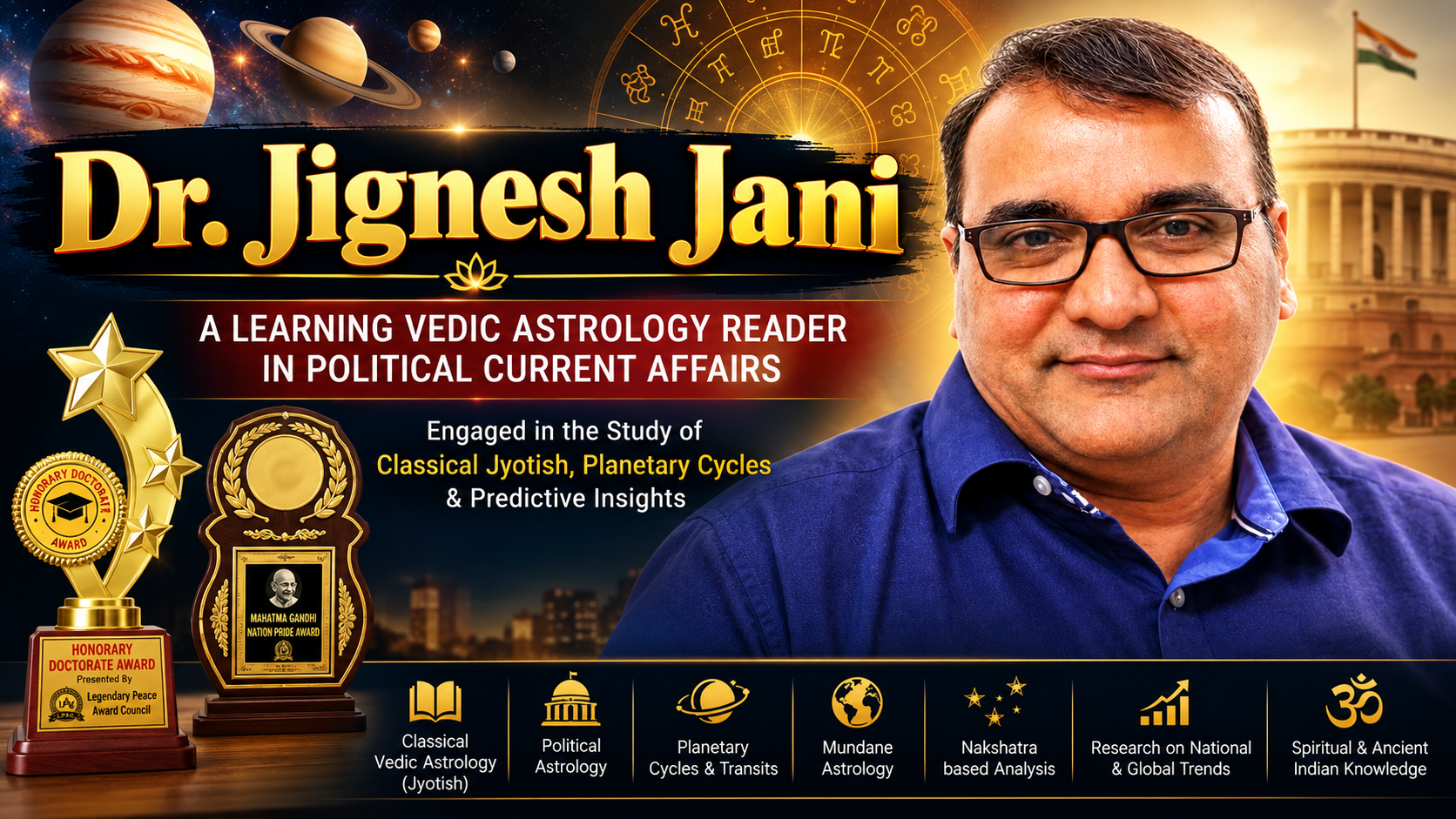

By Dr. Jignesh Jani
The recent diplomatic understanding between the United States and Iran has been widely discussed as a foreign policy achievement. Yet its deeper significance extends beyond bilateral relations. It illustrates how constitutional institutions, economic realities, and geopolitical priorities increasingly shape American foreign policy in the twenty-first century.
For several months, speculation surrounding a possible military confrontation between Washington and Tehran dominated global headlines. Energy markets reacted to every development, security analysts evaluated potential scenarios, and regional governments prepared for possible instability. However, diplomacy ultimately replaced escalation, reflecting not only political choice but also institutional necessity.
A common misunderstanding is that the President of the United States possesses unrestricted authority to initiate prolonged military action. In reality, the American constitutional system distributes power among multiple institutions. While the President serves as Commander-in-Chief, Congress controls military funding, authorizations, and long-term strategic commitments. These constitutional safeguards were designed to prevent unilateral decision-making in matters of war.
Current political conditions further reinforce these institutional limits. Rising public concern over government spending, increasing national debt, and widespread reluctance toward another prolonged overseas conflict make securing political consensus for military action considerably more difficult than in previous decades.
Against this backdrop, diplomacy emerged as the most practical strategy. Rather than representing weakness, negotiations demonstrated an understanding of contemporary geopolitical realities. Sustainable agreements often produce greater long-term stability than costly military campaigns.
The implications extend well beyond U.S.-Iran relations. Lower regional tensions could improve energy security and contribute to greater stability in global oil markets, benefiting energy-importing countries such as India. At the same time, reduced engagement in the Middle East enables Washington to devote greater strategic attention to the Indo-Pacific, where competition with China continues to intensify.
Ultimately, this development reflects an increasingly multipolar international system in which institutional constraints, economic interdependence, and diplomacy shape global outcomes as much as military power. The agreement serves as a reminder that enduring influence is often achieved through negotiation rather than confrontation.